Copying important documents is a common practice, but understanding the difference between a regular copy and a certified copy is vital for your legal and administrative needs. A certified copy is an official duplicate of an original document, verified as a true and accurate representation. In the UK, certain situations necessitate the use of certified copies, such as applying for a passport, loan agreements, or court proceedings. This blog post will guide you through what certified copies are, when they’re needed, and how to obtain them.
Key Takeaways:
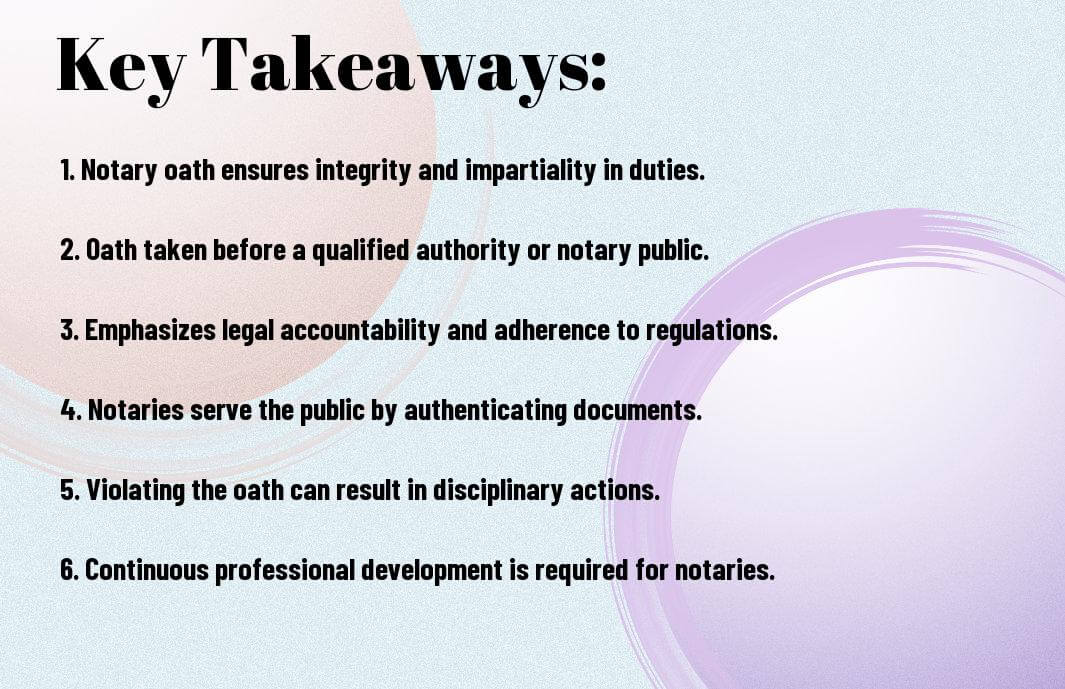
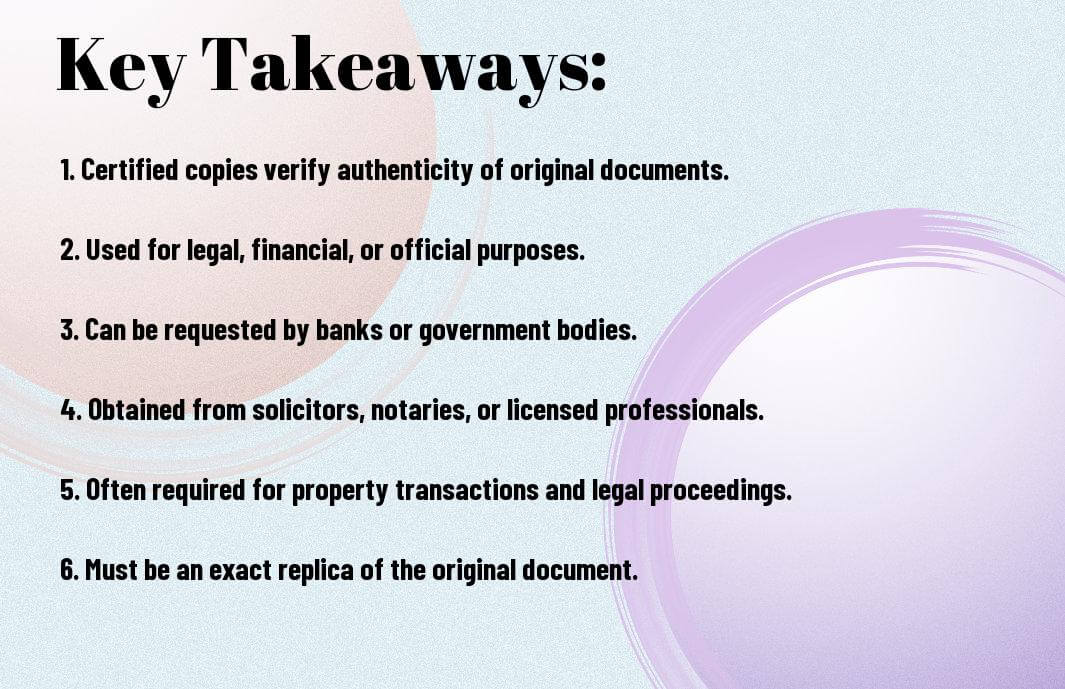
- Definition: A certified copy is an official reproduction of a document that has been verified as a true and accurate representation of the original by a qualified individual or authority.
- Use Cases: Certified copies are often required for legal processes, including property transactions, court proceedings, or when submitting documents to government agencies.
- Who Can Certify: Only specific professionals such as solicitors, notaries, or certain public sector officers are authorized to provide certified copies in the UK.
- Identification: When obtaining a certified copy, individuals may need to show identification to confirm their identity and connection to the original document.
- Validity: The certification process ensures that the copy is legally valid for official purposes and carries the same weight as the original document.
Definition of a Certified Copy
To put it simply, a certified copy is a duplicate of an original document, verified as a true and complete reproduction by a qualified individual or authority. This process ensures that the information contained in the copy accurately reflects the data in the original document, providing authenticity and reliability when required for various legal and administrative purposes in the UK.
Explanation of a Certified Copy
An important aspect of a certified copy is that it must be created from the original document, and the person certifying it must confirm its validity. This certification is typically done by professionals such as solicitors, notaries, or officials who have the necessary authority to validate documents, ensuring that you can use the certified copy in place of the original when needed.
Differences Between Certified Copies and Other Copies
About certified copies, they differ significantly from standard photocopies and unverified reproductions. While regular copies do not carry any assurance of authenticity, certified copies are formally validated, making them suitable for official use in contexts such as legal proceedings, immigration applications, or mortgage processes.
To understand these differences further, it is necessary to note that while regular copies can be easily made and shared without any verification, a certified copy requires a formal declaration of accuracy. This validation means that certified copies often carry more weight in legal and administrative matters, providing peace of mind that your document is recognized as legitimate by institutions and authorities.
Importance of Certified Copies in the UK
While navigating legal and official processes in the UK, understanding the significance of certified copies is imperative. These documents serve as reliable proof of identity, ownership, and various formal actions, enhancing the credibility of your submissions and helping you avoid complications in your dealings with authorities.
Legal Recognition
Certified copies are recognized by various institutions and bodies in the UK as valid representations of original documents. You will often find that banks, courts, and government agencies require certified copies to ensure that you present authentic information without needing the original document each time.
Use in Official Transactions
Above all, certified copies are indispensable in official transactions where you need to prove your personal or financial information. They simplify processes like applying for loans, property transactions, or presenting identification in legal matters.
Another pivotal aspect of using certified copies in official transactions is their role in enhancing efficiency. By providing certified copies instead of originals, you protect your imperative documents from wear and tear while ensuring that the necessary parties have the information they need. This practice helps streamline procedures, whether you are dealing with financial institutions, legal agencies, or governmental bodies, making your experience smoother and more secure.
When is a Certified Copy Required?
Many situations in the UK necessitate a certified copy, particularly when you need to submit original documents for applications or legal processes. This can include instances such as applying for a passport, submitting documents for a mortgage, or dealing with estate matters. By providing a certified copy, you ensure that your original documents remain safe and secure while still fulfilling requirements for verification.
Common Scenarios
Among the common scenarios where you may need a certified copy are securing employment, enrolling in educational institutions, or applying for government services. Each of these contexts often requires proof of identity, address, or qualifications, making certified copies imperative to validating your information without risking your original documents.
Specific Requirements for Different Documents
An understanding of the specific requirements for various documents can help you prepare the right certified copies. Birth certificates, marriage certificates, academic transcripts, and legal documents like wills all have particular guidelines to follow. Knowing these can save you time and ensure your submissions meet the necessary standards.
Copy requirements vary by document type; for instance, a birth certificate may need to be certified by a solicitor or notary public, while an academic transcript might require certification from the institution that issued it. Additionally, the certifying person often needs to include their name, address, and professional designation on the copy. It’s important to check each document’s specific guidelines to ensure compliance and avoid delays in processing your applications.
How to Obtain a Certified Copy
Once again, obtaining a certified copy requires you to follow specific steps to ensure the document is valid. Start by identifying the original document you need a certified copy of, and then contact an authorized individual or a designated organization, such as a solicitor or notary public, to assist you in the process. Be prepared to present the original document for verification and pay any associated fees for the certification service.
Process of Certification
Between the original document and the certified copy, the process involves verifying the authenticity of your document and creating a true copy. The authorized individual will inspect the original, confirm its legitimacy, and then produce a copy while attaching a certification statement. This statement asserts that the copy is an accurate representation of the original, providing the necessary legal assurance.
Authorized Individuals for Certification
After identifying the need for a certified copy, it’s important to engage an authorized individual for certification. These individuals include solicitors, notaries public, or certain public officials who are legally empowered to certify documents on your behalf.
Understanding the list of authorized individuals is imperative for ensuring your documents are certified properly. Solicitors can often provide certification services as part of their legal offerings. Notaries public are specifically trained to authenticate documents and may be convenient options, particularly for international documents. Additionally, some government bodies and organizations may have designated employees authorized to perform certifications, so always verify their credentials before proceeding.
Costs Associated with Certified Copies
Keep in mind that obtaining certified copies can incur various costs. It is important to understand these expenses before proceeding with your requests. For more information on Who Can Certify Documents in the UK? | Requirements, consult the relevant guidelines to help you budget effectively.
Typical Fees
Around £5 to £15 per document is typically charged for certification by a professional. However, this amount may vary based on the certifier’s qualifications and location, so getting an estimate beforehand can be beneficial.
Potential Additional Costs
With certified copies, you should also be prepared for potential additional costs, which can arise from various factors such as postage fees, travel expenses, or the need for multiple copies.
Costs can quickly add up if you require several documents certified or if there are urgency fees for expedited services. Additionally, if you are using a notary public or a lawyer to certify your documents, their hourly rates or additional charges may apply. Always verify these potential fees when budgeting for certified document copies.
Common Myths and Misunderstandings
Your understanding of certified copies may be clouded by myths and misunderstandings. Many people believe that any document can be certified without proper authority, but this isn’t the case. It’s important to familiarize yourself with standards and guidelines. For accurate information, refer to the Certified Copies Guidance provided by official sources to ensure you’re not misled.
Misconceptions About Certification
Behind the common misconceptions about certification lies a lack of clarity regarding who can provide a certified copy and under what circumstances. Some believe that a simple photocopy suffices, but it must be accompanied by an authentication from a qualified individual or institution to hold legal weight.
Clarifying Common Questions
Below are some frequent questions about certified copies that often lead to confusion. You might find yourself wondering about the necessary conditions for a document to be certified or whether a specific format is required.
This information is necessary to navigate the legal landscape surrounding certified copies. Various entities, including banks, courts, and government offices, may have specific requirements or acceptability criteria for certified documents. Understanding what counts as ‘certified’ versus merely ‘photocopied’ is vital to ensuring your documents are accepted for their intended purposes.
Conclusion
Presently, a certified copy is a duplicate of a vital document that has been verified by an authorized individual, confirming it is a true and accurate representation of the original. You may need a certified copy for various situations, such as legal proceedings, passport applications, or property transactions in the UK. Understanding when to obtain one can help streamline your processes and ensure that your important documents are recognized officially. Always check specific requirements to ensure you have the correct documentation for your needs.
Q: What is a certified copy?
A: A certified copy is an official copy of a document that has been verified as a true and accurate reproduction of the original. In the UK, a certified copy is often stamped or signed by a qualified individual, such as a solicitor, notary public, or a commissioner for oaths. This process provides assurance that the contents of the copy are identical to those of the original document.
Q: When is a certified copy required in the UK?
A: Certified copies are typically required in various situations, such as when applying for legal documents, submitting paperwork for financial transactions, or providing proof of identity. For example, when applying for a UK passport, you may need to submit certified copies of your birth certificate or marriage license. Additionally, businesses may require certified copies of registration documents for official processes or during audits.
Q: How can I obtain a certified copy of a document?
A: To obtain a certified copy, you must take your original document to a qualified person who can certify it. This can be a solicitor, a notary public, or a commissioner for oaths. They will check the original document and create a copy that they will then sign and stamp, verifying that it is a true likeness of the original. It is advisable to inquire about any specific requirements or fees associated with this service beforehand.