Most individuals and businesses engaging in international transactions encounter the need for notarization to validate documents across borders. Understanding the legal role of a notary is imperative for ensuring that your documents are authentic and recognized in different jurisdictions. Notaries can help prevent fraud and verify the identities of the parties involved, significantly enhancing the credibility of your documents. In this blog post, you will learn about the functions and importance of notaries in international dealings, helping you navigate global transactions with confidence.
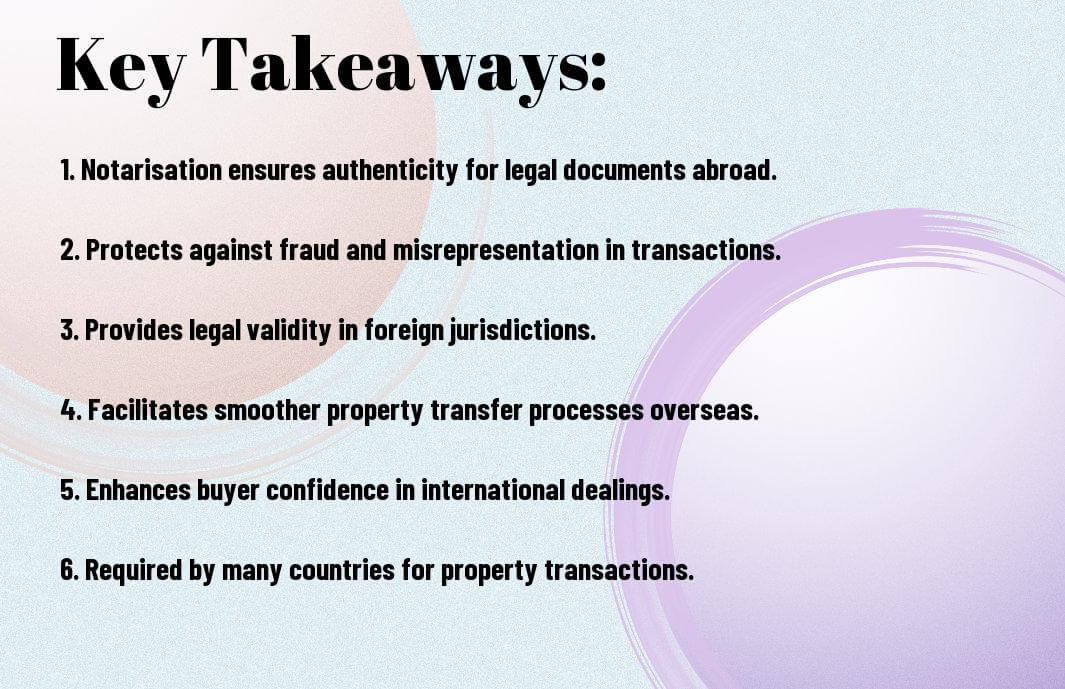
Key Takeaways:
- Verification: Notaries authenticate signatures and documents to prevent fraud in international transactions.
- Legal Compliance: They ensure that all documents comply with local laws and regulations, facilitating smooth cross-border dealings.
- Language Barriers: Notaries often provide translations or ensure that documents are in an acceptable language for all parties involved.
- Record Keeping: They maintain official records of all notarized documents, which can serve as crucial evidence in legal disputes.
- Trust and Credibility: Notarized documents carry a presumption of authenticity, enhancing the trustworthiness of international agreements.
Understanding the Notary’s Role
Your understanding of a notary’s role is imperative when engaging in international transactions. A notary public acts as an impartial witness in the signing of documents, providing imperative verification services to ensure that the parties are who they claim to be. This verification helps prevent fraud and protects the integrity of the transaction across borders.
Definition and Function of a Notary
Across various jurisdictions, a notary is a public official who is authorized to perform certain legal formalities, including witnessing signatures and administering oaths. Their primary function is to authenticate documents, providing validation that can be relied upon by parties in different countries, thereby facilitating smoother international dealings.
Types of Notary Services in International Transactions
Around the globe, notary services can vary significantly; however, certain types are commonly provided in international transactions. These include document authentication, certification of translations, and notarization of power of attorney. Each service plays a vital role in ensuring that documents meet the requirements of foreign authorities.
| Notary Service | Description |
|---|---|
| Document Authentication | Verifying the legitimacy of documents for foreign use. |
| Certification of Translations | Ensuring that translated documents are accurate and reliable. |
| Notarization of Power of Attorney | Formalizing authority given to someone to act on another’s behalf. |
| Affidavit Services | Notarizing sworn statements or declarations. |
| Verification of Identity | Confirming the identity of individuals signing documents. |
Any notary services you require in international contexts may depend on the specific legal requirements of the countries involved. It’s important to consult with a notary who understands the regulations governing both the originating and receiving jurisdictions.
Types of Notary Services in International Transactions
And understanding the specific types of notary services needed can enhance the confidence in international business dealings. Apart from the previously mentioned services, notaries may also provide assistance with export and import documentation, marriage and divorce certificates, and real estate transactions across borders.
| Notary Service | Description |
|---|---|
| Export/Import Documentation | Certifying documents required for international trade. |
| Marriage Certificates | Notarizing the validity of marriage documents for international purposes. |
| Divorce Certificates | Authenticating divorce documents for foreign jurisdictions. |
| Real Estate Transactions | Facilitating property transactions across international borders. |
| Statutory Declarations | Notarizing declarations as required by law for legal proceedings. |
Any notary services you consider imperative will depend on your specific needs and the legal requirements of the countries you’re engaging with.

Legal Authority of Notaries
While notaries are necessary figures in international transactions, their legal authority varies by jurisdiction. They act as impartial witnesses to ensure the integrity of documents and authentication processes, which helps to prevent fraud and disputes. In many countries, notaries have the authority to certify signatures, administer oaths, and verify identities, contributing significantly to the legal validity of international agreements.
Jurisdictional Considerations
On entering an international transaction, it’s vital to understand that notaries’ powers differ based on local laws. This disparity might affect the acceptance of your documents in various countries. Thus, you should ensure your notary complies with the relevant legislation and practices of the jurisdictions involved in your transaction.
Authentication and Verification Processes
Verification of documents is a fundamental responsibility of notaries. They must confirm the authenticity of identities and signatures, ensuring that all parties involved willingly agree to the terms presented. This verification process protects you from potential legal issues and fosters trust in international dealings.
Jurisdictional factors greatly influence how authentication and verification occur. Each region has specific requirements for notarization, including what constitutes an acceptable identification method. Therefore, you need to consult the legal standards of the relevant jurisdictions to ensure your documents meet their requirements and are recognized internationally. Adhering to these protocols can streamline your transactions and help avoid complications down the road.

Notarization Requirements Across Borders
For international transactions, notarization requirements can vary significantly from country to country. You must understand the specific regulations and procedures in each jurisdiction involved in your transaction to ensure compliance. This understanding can help prevent legal complications and facilitate smoother business dealings across borders.
Differences in Notarial Practices
Differences in notarial practices can lead to confusion in international transactions. You may encounter varying levels of authority, responsibilities, and documentation requirements depending on the notary’s country. It is necessary to familiarize yourself with these distinctions to ensure that your documents are properly recognized and validated in the respective jurisdictions.
The Hague Convention and Apostille Process
Convention is an important framework that facilitates the recognition of notarial acts across borders. If you are dealing with international documents, you should be aware that the Apostille process simplifies the verification of signatures and seals for documents used in countries that are signatories to the Hague Convention.
Hence, understanding the Apostille process can greatly enhance your ability to conduct international transactions. By obtaining an Apostille for your notarized documents, you confirm their authenticity, making it easier for those documents to be accepted in other countries participating in the Hague Convention. This streamlines the process and saves time, proving beneficial for your international dealings.
The Importance of Notary in Cross-Border Agreements
After entering the world of international transactions, understanding the pivotal role of a notary becomes important. Notaries ensure that cross-border agreements are executed smoothly, providing a layer of authenticity that protects all parties involved. They play a critical role in verifying identities and ensuring that documents meet specific legal standards, which is particularly important when navigating the complexities of different jurisdictions.
Preventing Fraud and Ensuring Validity
Against a backdrop of global transactions, notaries serve as key safeguards against fraudulent activities. By verifying identities and witnessing signatures, they help to ensure that the parties entering agreements are legitimate and that the documents are valid. This minimizes the risk of dispute and enhances the credibility of your international dealings.
Facilitating International Trade and Investment
Behind the scenes of international trade and investment, notaries streamline processes by ensuring that documents comply with local laws and international requirements. They provide important services such as apostille certifications, which facilitate the recognition of legal documents across borders.
Hence, the role of notaries in facilitating international trade and investment cannot be overlooked. Their expertise allows you to navigate the complexities of diverse legal systems with confidence. Notaries assist in drafting, executing, and authenticating agreements, making it easier for you to engage in global commerce. By offering these services, they help reduce legal risks and promote trust among international partners, ultimately enhancing your business opportunities across borders.
Challenges Faced by Notaries in International Transactions
Many notaries encounter several challenges when dealing with international transactions. These hurdles can range from differing legal requirements and documentation standards to varying cultural practices. As a notary, you must navigate these complexities to ensure that your notarizations are recognized and accepted in multiple jurisdictions, which can be a time-consuming and intricate process.
Cultural and Legal Variances
Any notary operating in the international arena must be aware of the diverse cultural and legal variances that can impact transactions. Different countries have distinct legal systems, which may dictate unique requirements for notarization. In your role, you should familiarize yourself with these differences to ensure compliance and protect your clients’ interests.
Navigating Language Barriers
About the challenges posed by language barriers, notaries frequently encounter documents written in foreign languages that require notarization. This situation can complicate the process, as you must ensure the authenticity and content of the documents are accurately conveyed. Misinterpretations can lead to significant legal issues or the rejection of the notarization entirely.
Faced with language barriers, you should consider employing professional translation services, especially for complex legal documents. Creating effective communication methods with clients and foreign parties can alleviate misunderstandings. Additionally, being proficient in multiple languages or having relevant language resources at your disposal will enhance your ability to serve clients effectively and maintain the integrity of the international transactions you oversee.
Best Practices for Engaging Notaries in International Affairs
Unlike local transactions, international dealings often require additional verification. Ensuring that you engage the right notary is vital for the validity of your documents. For insights on notarization specifics, check out When Do I Need a Public Notary for Overseas Docs? A Guide. Familiarizing yourself with best practices can significantly streamline your international affairs.
Selecting a Qualified Notary
Along your journey to finalize international transactions, selecting a qualified notary is key. Look for professionals with specific experience in international laws and regulations. Verifying their credentials ensures they are adequately equipped to handle your unique needs.
Document Preparation and Submission
An effective document preparation process is important for successful notarization. Be thorough and meticulous when gathering the required documentation to prevent delays and complications.
To optimize your document submission, ensure all paperwork is correctly filled out and meets specific legal requirements. Familiarize yourself with the necessary forms, as international transactions demand a higher level of precision. Preparing your documents in advance not only saves time but also supports a smoother notarization process. Properly submitted documents ultimately facilitate faster approvals and enhance the credibility of your transactions across borders.
Final Words
Now that you understand the legal role of a notary in international transactions, you can appreciate the importance of their services in certifying documents, verifying identities, and ensuring compliance with relevant laws. Engaging a notary can streamline your international dealings, providing a layer of security and authenticity to your agreements. As you navigate global business or legal matters, utilizing a notarization can enhance the credibility of your documents and facilitate smoother interactions across borders.
FAQ
Q: What is the primary function of a notary in international transactions?
A: The primary function of a notary in international transactions is to verify the identities of the parties involved and to witness the signing of documents. This ensures that the documents are authentic and that the signatures are valid. Notaries act as impartial third parties who certify that the signatories are who they claim to be, which helps prevent fraud and disputes. Additionally, the notary may also be responsible for preparing the documents in accordance with both local laws and the specific requirements of the countries involved in the transaction.
Q: How does a notary ensure compliance with international laws?
A: A notary ensures compliance with international laws by being knowledgeable about the legal requirements in different jurisdictions. They may need to understand various regulations regarding notarization, such as the specific forms and procedures required by foreign countries. Additionally, they must be aware of treaties, such as the Hague Apostille Convention, which allows for the recognition of notarized documents between member countries. To facilitate international transactions, notaries often collaborate with legal professionals or consult guidelines that dictate how to properly authenticate documents for use abroad.
Q: Can notaries provide legal advice in international transactions?
A: Generally, notaries are not allowed to provide legal advice. Their role is limited to witnessing and certifying signatures, as well as ensuring that the documents are properly executed. Although notaries may have a thorough understanding of the notarization process, they cannot give legal counsel regarding the contents of the documents or the transaction itself. If guidance is needed on legal matters related to international transactions, it is advisable to consult a qualified attorney who specializes in international law.