Notary

Do I Need a Notary for My Power of Attorney in the UK

It’s important to know whether you need a notary for your Power of Attorney in the UK, as the requirements can vary depending on your situation. While not all powers of attorney need to be notarised, specific circumstances may dictate that you do. For further insight, you can check out When a Signed Power of Attorney is Required – Apostille for a detailed overview. Understanding these requirements can help you ensure your documents are valid and legally binding.

Key Takeaways:

  • Not Required: A notary is not legally required for a Power of Attorney in the UK.
  • Witness Signatures: Instead of a notary, the document must be signed in the presence of a witness who is not a family member.
  • Specific Types: Certain types of Power of Attorney, such as lasting powers, may require additional steps for validity.
  • Overseas Use: For a Power of Attorney to be used abroad, notarization may be needed depending on the country.
  • Legal Advice: Seeking legal advice can clarify requirements and ensure the document suits your needs.

Understanding Power of Attorney

Before exploring the necessity of a notary for your power of attorney, it’s important to grasp what a power of attorney entails. This legal document allows you to appoint someone to act on your behalf in personal, medical, or financial matters when you cannot do so yourself.

Definition and Types

Along with the basic concept, there are several types of power of attorney to consider:

Type Description
General Gives broad powers to the attorney-in-fact.
Limited Specific powers for a defined purpose.
Durable Remains effective even if you become incapacitated.
Springing Takes effect only under certain conditions.
Health Care Specifically for medical decision-making.
  • General
  • Limited
  • Durable
  • Springing
  • Health Care

Knowing the different types helps you select the right one for your needs.

Purpose and Importance

Importance lies in the fact that a power of attorney empowers you to plan for your future, ensuring that your wishes are respected when you can no longer advocate for yourself.

Understanding the purpose of a power of attorney is vital in safeguarding your interests. It allows you to designate a trusted person to manage your affairs, ensuring continuity in financial and medical decisions. By having a power of attorney in place, you maintain a degree of control, preventing potential disputes or complications when faced with incapacity. Ultimately, it provides you with peace of mind, knowing that someone you trust will handle your affairs according to your wishes.
Notarization in the UK

You may wonder about the necessity of notarization when creating a Power of Attorney in the UK. While it’s not always a requirement, understanding the role of a notary can help you assess its importance for your specific situation and ensure that your legal documents are recognized and enforceable. Notarization can add a layer of authenticity that might be beneficial in certain circumstances.

What is a Notary Public?

An individual appointed to serve the public as an impartial witness in legal matters is known as a Notary Public. They are responsible for verifying identities, witnessing signatures, and ensuring that documents are executed appropriately and within the law.

Role of Notaries in Legal Documents

Along with verifying identities, notaries play an important role in the execution of legal documents, such as Powers of Attorney, trust deeds, and property transactions.

Their main purpose is to prevent fraud by ensuring that the signatories are who they claim to be and fully understand the contents of the documents they are signing. By witnessing the signing of a document, notaries lend their official seal or signature, which can help affirm the document’s legitimacy and may be required by certain institutions or authorities. Engaging a notary can be particularly helpful if your Power of Attorney will be used in different jurisdictions or needs to meet strict legal standards for acceptance.

Do You Need a Notary for Power of Attorney?

All powers of attorney do not necessarily require notarization in the UK. However, having a notary can provide additional authentication, especially when dealing with international matters or foreign jurisdictions. While many situations will only need your signature, consulting a notary can give you peace of mind that your document meets legal standards.

Legal Requirements

Before creating a power of attorney, you should familiarize yourself with the specific legal requirements associated with it. Generally, a power of attorney in the UK must be signed by you and at least one witness, but notarization is only required in particular circumstances. Reviewing these necessities helps ensure that your document is valid and enforceable.

Situations Requiring Notarization

After creating a power of attorney, there are scenarios where notarization becomes important. If your document will be used abroad or in the context of international transactions, notarization is often required by foreign authorities or institutions. Understanding these conditions helps you prepare adequately for any legal obligations your power of attorney may entail.

But not all situations demand notarization. If you’re using your power of attorney solely within the UK, as long as it meets the basic legal criteria, you may not need a notary. However, if you anticipate any complexity or require recognition in multiple jurisdictions, consulting a notary might be beneficial to avoid potential complications later on.

Alternatives to Notary Services

Your options for executing a Power of Attorney in the UK extend beyond notary services. You can also consider alternatives such as local solicitors, who can offer guidance and ensure your documents are legally compliant. Additionally, depending on your situation, an official witness may suffice for the execution of your documents, eliminating the need for a notary altogether.

Witness Requirements

Beside using a notary, you may need a witness to validate your Power of Attorney. It is imperative that your chosen witness is impartial—meaning they should not be a family member or a beneficiary of your Power of Attorney. Having an independent witness present when you sign your document adds an extra layer of legitimacy.

Other Forms of Validation

Beside notary services, there are other avenues for formal validation of your Power of Attorney. These can include obtaining a solicitor’s certification or using specific forms designed for the task. You may also explore options like registering your Power of Attorney with the Office of the Public Guardian, which provides an official recognition of your authority.

Further, validating your Power of Attorney through these methods ensures that your document is recognized in your dealings, providing peace of mind. By exploring various validation options, you can find the method that best suits your needs while ensuring the legality of your Power of Attorney. This thorough approach supports your intentions and helps avoid any potential complications in the future.

Implications of Notarization

Not having your Power of Attorney notarized can lead to significant implications. While notarization is not a legal requirement in the UK, it can enhance the document’s credibility and serve as a safeguard against potential disputes. Without it, third parties may question the authenticity of the Power of Attorney, leading to complications in accepting and acting upon it.

Benefits of Notarized Power of Attorney

At its core, a notarized Power of Attorney provides you with peace of mind, ensuring that your document is recognized and respected by institutions and individuals. It adds a layer of legitimacy, making it easier for your appointed attorney to act on your behalf during critical situations. Additionally, it may help prevent fraud, as the notary verifies your identity and intentions during the signing process.

Risks of Not Having a Notary

To proceed without notarization can expose you to several risks regarding the validity and acceptance of your Power of Attorney. Without a notary’s endorsement, individuals or organizations might refuse to honor your document, complicating situations where immediate action is required. Furthermore, the lack of notarization can sometimes lead to challenges in court if disputes arise regarding the authority granted to your attorney.

Benefits of not having a notarized Power of Attorney can include potential cost savings and a simpler execution process. However, these advantages are often outweighed by the risks of complicated acceptance, disputes, and possible fraud. You could find yourself in a situation where your ability to have someone act on your behalf is severely restricted, making it critical to evaluate the importance of notarization for your specific needs.

Common Misconceptions

Now, many people hold misconceptions regarding the need for notarization when executing a Power of Attorney in the UK. Some believe that all legal documents must be notarized to be valid, while others think that the presence of a notary automatically suffices for a legally binding agreement. Understanding the specifics can greatly impact how you approach your legal documentation, so it’s vital to clarify these misunderstandings.

Myths about Notarization

Any discussion on notarization brings forth various myths, one being that notarization guarantees the validity of a Power of Attorney. In reality, while a notary can witness signatures, they cannot validate the content of the document or its legal consequences. This misconception may lead you to believe that notarization alone fulfills all legal requirements necessary for your Power of Attorney.

Clearing up Confusion

Clearing up confusion surrounding notarization is vital for ensuring that your Power of Attorney is valid and effective. Many assume that notarization is universally required in the UK, but this is not the case. The law varies across jurisdictions, and while certain documents may benefit from notarization, it’s important to understand that a Power of Attorney typically requires different forms of witness signatures to be enforceable. Thus, staying informed about your specific requirements is beneficial.

Common misunderstandings can lead to unnecessary complications when establishing your Power of Attorney. It’s vital to consult with a legal professional who can guide you on the best practices tailored to your situation. Understanding your specific requirements and clarifying misconceptions will help you ensure that your document is valid without unnecessary steps, like notarization, that may not be needed in your case.

Conclusion

Presently, you may not need a notary for your power of attorney in the UK, as long as it is properly signed and witnessed. However, if your document will be used abroad, or if you wish to ensure greater acceptance, having it notarized might be beneficial. Always check the specific requirements of the institution or authority that will be using the power of attorney to ensure compliance with their regulations.

Q: Is a notary required for a power of attorney in the UK?

A: In the UK, it is not mandatory to have a power of attorney (POA) document notarized. However, you may choose to have it notarized for added authenticity, especially if the document will be used abroad. Notarization can provide additional assurance to third parties regarding the validity of the signature and the identity of the individuals involved. It is advisable to check specific requirements if the POA is intended for use in another country.

Q: What types of power of attorney can benefit from notarization?

A: While not all power of attorney documents require notarization, certain types may benefit from it. For instance, if you are executing a lasting power of attorney (LPA) for financial matters or health care decisions and anticipate that it may be presented internationally, notarization can help prevent potential disputes about the document’s authenticity. Additionally, if the POA is intended for a specific financial institution or a governmental body, it might be worthwhile to inquire if they have specific notarization requirements.

Q: How do I get a power of attorney notarized in the UK?

A: To get a power of attorney notarized in the UK, first, ensure that the document is complete and signed by the appropriate parties. Then, locate a notary public who is registered and has the authority to notarize documents. You will need to present valid identification, and in some cases, the notary may require you to be in their presence while signing the document. The notary will then add their official seal and signature, confirming that they have witnessed the signing and verified your identity.

Notary Services for Businesses – What You Need to Know

Notary services play a vital role in the legal and business landscape, ensuring that important documents are verified and executed properly. If you’re a business owner, understanding how notary services can benefit your operations is important. From contract signing to document authentication, knowing when and how to use these services can enhance your business practices. To explore effective strategies for your notary business, check out The 3 tiers of a successful Notary business.

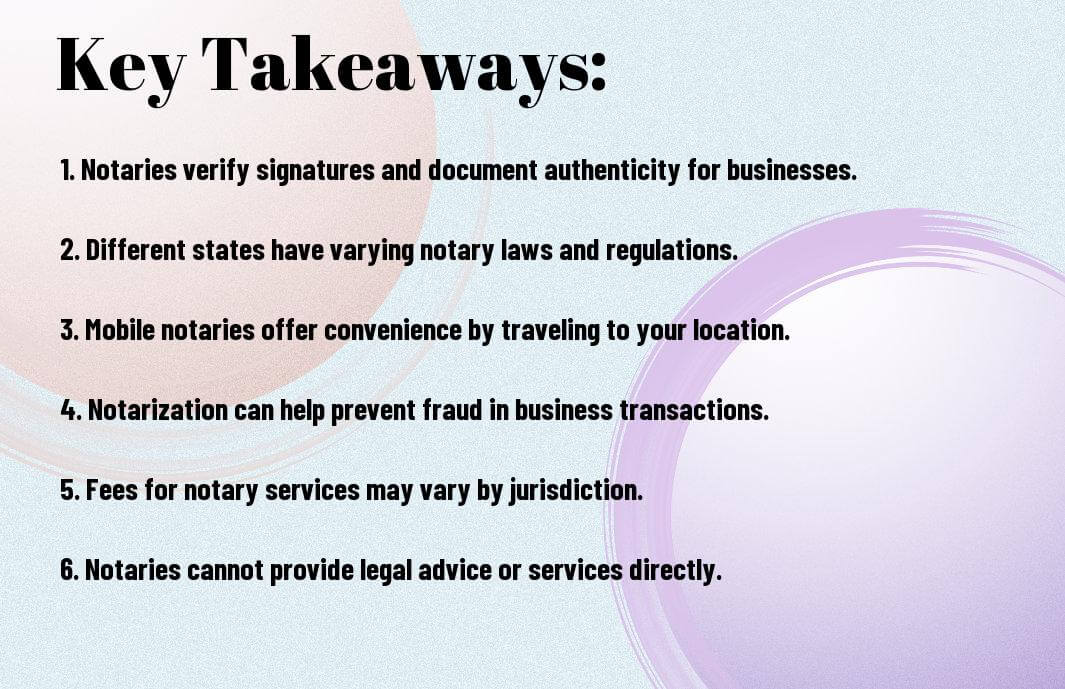
Key Takeaways:

  • Understanding Notary Services: Notary services can validate and authenticate documents for businesses, ensuring legal compliance and acceptance.
  • Types of Documents: Various documents such as contracts, deeds, and affidavits often require notarization, making it important for businesses to know which are necessary.
  • Choosing a Notary: Selecting a qualified notary public is important; look for those with proper credentials and relevant experience in business matters.
  • Cost Considerations: While notary fees vary, businesses should factor these costs into their budget as they may need to utilize services frequently.
  • Remote Notarization: Explore options for remote notarization, which has become more common and can offer convenience for businesses with multiple locations.

Importance of Notary Services for Businesses

A solid understanding of notary services is necessary for your business operations. Notary services help foster trust and legitimacy in your transactions, providing necessary verification that can protect you from disputes. Utilizing these services can streamline your business processes, making it easier for you to focus on growth without overlooking legal intricacies.

Legal Validity and Protection

Notary services enhance the legal validity of your documents, ensuring that agreements, contracts, and signatures are formally recognized. This added layer of protection can safeguard your interests and prevent potential legal issues from arising, assuring that your business dealings comply with applicable laws.

Risk Mitigation and Compliance

For businesses, notary services play a vital role in risk mitigation and compliance. You not only create a verified record of important documents but also demonstrate diligence in following legal protocols.

Hence, by incorporating notary services into your business operations, you significantly reduce the chances of disputes and legal complications. This proactive approach helps you comply with industry regulations, protecting your business from costly litigation. An established notary process gives you peace of mind, knowing that your documents are valid and recognized, thus fostering confidence among clients and stakeholders alike.

Types of Notary Services Available

Even though the core function of a notary is to verify signatures, there are various types of notary services tailored for your business needs. These services include:

  • Document notarization
  • Loan signing
  • Wedding officiant services
  • Real estate closings
  • Remote online notarization

This versatility makes it beneficial to understand the specific services applicable to your situation. To explore opportunities, check out How to Start a Mobile Notary Business in 2024.

Service Description
Document notarization Verification of signatures on various documents.
Loan signing Aiding in the signing of loan documents.
Wedding officiant services Performing civil wedding ceremonies.
Real estate closings Facilitating the signing process in property transactions.
Remote online notarization Notarizing documents via video conferencing.

Acknowledgments

Among the various services, acknowledgments are commonly required in many business transactions. This service confirms that the signer of a document is authentic and willingly signed without coercion. It ensures that your business transactions are valid and legally binding, providing you peace of mind.

Jurats

Before you proceed with signing a legal document, it’s important to understand what a jurat entails. A jurat is a notarial act wherein the signer swears or affirms that the contents of a document are true. This service is crucial for affidavits and other sworn statements to ensure the integrity of the information disclosed.

And in instances where oaths or affirmations are required for legal declarations, a jurat becomes indispensable. By utilizing this service, you can provide assurances that your documentation is not only verified but also holds legal standing in court. Therefore, incorporating jurat services into your business practices enhances the credibility and authenticity of your crucial documents.

How to Choose a Notary Service

Once again, selecting the right notary service for your business requires careful consideration. You should assess their reputation, client reviews, and the types of services they offer to ensure they meet your specific needs. Make sure to explore their communication style and availability, as these factors will significantly impact your overall experience.

Credentials and Experience

The credentials and experience of a notary service are paramount to ensuring that your documents are handled correctly. Verify their licensing, certifications, and any relevant training they have completed. A seasoned notary will have a thorough understanding of legal requirements and can provide you with the assurance that your papers will be notarized in compliance with your state’s laws.

Specialization and Availability

On top of credentials, consider the specialization and availability of the notary service. Different notaries may focus on various fields, such as real estate, legal documents, or business contracts. It’s necessary to choose a notary who specializes in the area relevant to your needs, ensuring they understand the specific nuances involved.

Choose a notary service that not only meets your general requirements but also aligns with your business’s particular needs. Availability is equally important; confirm their hours of operation and whether they offer mobile notary services to accommodate your schedule. This tailored approach can save you time and streamline your processes, allowing you to focus on running your business efficiently.

Online Notary Services: An Overview

Keep in mind that online notary services have emerged as a convenient and efficient alternative to traditional notarization methods. By leveraging technology, you can connect with a qualified notary public via video conferencing, catering to both personal and business needs. This service has made it possible for you to notarize documents from the comfort of your own office or home, saving time and enhancing accessibility.

Benefits of Online Notarization

Among the key advantages of online notarization is the increased flexibility it offers. You can schedule your notarization at a time that suits you, bypassing the need to travel to a physical location. This not only streamlines document handling but also allows you to complete your transactions more quickly, making it an ideal solution for busy professionals.

Legal Considerations

Legal aspects of online notarization must be carefully considered to ensure compliance with state laws. Since regulations can vary significantly, you need to be aware of your state’s specific guidelines and requirements for online notarizations.

Also, ensure that the online notary service you choose is authorized to operate in your state, as some states have not adopted remote notarization laws. It’s advisable to verify if the documents you’re intending to notarize are permissible for online notarization, and to always retain records of your transactions. By understanding these legal considerations, you can better secure your business transactions and protect your interests.

Common Myths About Notary Services

Now, it’s important to address the common myths that surround notary services. Many people believe that notaries can provide legal advice or that their services are only necessary for real estate transactions. In reality, notaries serve to verify identities and witness signatures on documents, playing a vital role across various business transactions. Understanding these myths can help ensure that you utilize notary services effectively for your business needs.

Misconceptions Clarified

Beside the belief that notaries are lawyers, another misconception is that notarization guarantees the legality or enforceability of a document. In truth, notarization simply confirms the identity of the signers and their willingness to sign, leaving the responsibility for the content of the document to those involved.

Importance of Awareness

Among the many reasons to be aware of notary services and their common myths is that misinformation can lead to oversights in important transactions. Being informed means you can make better decisions and avoid complications that arise from misconceptions.

Considering how often notary services come into play in various business scenarios, understanding their true purpose and limitations helps you approach each situation with clarity and confidence. Staying informed allows you to protect your interests and ensure that your documents are managed properly throughout any business transaction. Awareness helps you leverage notary services effectively, maximizing their benefits while minimizing potential legal pitfalls.

Cost of Notary Services for Businesses

To understand the cost of notary services for your business, it’s important to factor in various elements that can influence the price. These rates may vary based on the location, complexity of the documents, and the notary’s experience. Additionally, you may encounter additional charges for travel or after-hours services, which can also affect your total cost.

Factors Affecting Pricing

One of the main factors affecting notary service pricing is the type of document you need notarized. Other considerations include:

  • Geographic location
  • Notary’s level of experience
  • Time required for notarization
  • Travel expenses

This can lead to a wide range of costs for the services you require.

Budgeting for Notary Services

Budgeting for notary services is a smart move for any business owner. Understand the potential costs involved and consider setting aside a specific amount to cover these expenses regularly. This proactive approach will ensure you are prepared when you need notarization for important documents.

Cost in notary services can vary significantly based on several influencing factors. By planning your budget and accounting for potential variations in pricing, you can better manage your finances. Analyze your business needs and look for notaries in your area with transparent pricing. This way, you can ensure you have the necessary funds available when the time to notarize important documents arises.

To wrap up

Ultimately, understanding notary services is crucial for your business operations. Notaries play a key role in authenticating documents, ensuring compliance, and protecting against fraud. By incorporating notary services into your business processes, you can save time and enhance your credibility. Whether you require notarization for contracts, real estate documents, or other legal papers, knowing what to expect and where to find reliable notary services will empower you to navigate your business transactions with confidence.

FAQ

Q: What types of documents can notary services handle for businesses?

A: Notary services can assist businesses with a variety of documents including contracts, agreements, affidavits, powers of attorney, and more. These documents often require notarization to verify the identity of the signers and to ensure that they are signing willingly and under their own authority. It’s important for business owners to consult with a notary about the specific requirements for each type of document they need notarized.

Q: How do I choose a notary service that is right for my business?

A: When deciding on a notary service, consider factors such as their experience, availability, and areas of expertise. Look for a notary who has worked with businesses similar to yours and can provide references if needed. Additionally, check their accreditation and whether they are compliant with your state’s regulations regarding notary services. Accessibility is also key, so determine if they offer on-site services or if you need to visit their office.

Q: What are the typical fees associated with notary services for businesses?

A: Fees for notary services can vary widely depending on the location, the complexity of the documents, and the notary’s level of experience. Many states have established a maximum fee a notary can charge per signature, but additional charges may apply for services like traveling to a business location. It’s best to discuss and confirm the total fees upfront to avoid any surprises and to consider comparing costs among different notaries or service providers.

How to Prepare for Your Appointment with a UK Notary

It’s crucial for you to be well-prepared for your appointment with a UK notary to ensure a smooth and efficient process. Understanding the documents you need, the identification required, and the notary’s role can make a significant difference. This guide will walk you through the necessary steps, helping you gather your materials and understand what to expect during your appointment, so you can confidently navigate this important task.

Key Takeaways:

  • Gather Documents: Ensure you have all necessary documents ready for your appointment, including identification and any paperwork that needs notarization.
  • Understand Fees: Be aware of the fees associated with the notary service, as they can vary depending on the notary and the nature of the documents.
  • Schedule in Advance: Book your appointment ahead of time to secure a convenient time slot, especially if you have specific deadlines.
  • Know Your Purpose: Clarify the purpose of the notarization to avoid delays and ensure you bring the correct documents.
  • Signature Requirements: Familiarize yourself with any signature requirements, such as signing in front of the notary, to ensure a smooth process.

Understanding the Role of a Notary in the UK

The role of a notary in the UK is to act as an impartial witness to the signing of documents, ensuring their authenticity and proper execution. Notaries also provide legal advice, verify identities, and perform various administrative tasks related to the notarization process. This function guarantees that documents are treated with the necessary legal importance and can be used effectively under UK law and internationally.

Definition and Purpose

Definition: A notary public is a legally appointed professional authorized to certify documents, administer oaths, and witness signatures. The primary purpose of a notary is to prevent fraud and ensure that all parties involved in a transaction fully understand what they are signing.

Types of Documents Notarized

One common question is what types of documents you may need a notary for. Here’s a breakdown of typical documents that require notarization:

Common Documents Description
Wills Ensure your last wishes are validly documented.
Power of Attorney Authorize someone to act on your behalf legally.
Affidavits Sworn statements used in legal proceedings.
Contracts Verify agreements between parties.
International Documents Documents needed for use abroad.

This list highlights just a few instances where notarization is necessary. Here’s further information about other types of documents you might consider:

Other Documents Description
Corporate Documents Certificates of incorporation, resolutions, etc.
Property Deeds Providing legitimacy in real estate transactions.
Diplomas A testament to your academic achievements for foreign use.
Medical Documents Proof of consent or other medical matters.
Any Document needing recognition in legal or formal contexts.

Essential Documents to Bring

One of the most important steps in preparing for your appointment with a UK notary is to gather the crucial documents you’ll need. These typically include a valid form of identification, such as a passport or driving license, as well as any documents that require notarization. Having these materials ready not only streamlines the process but also ensures that your notary can assist you efficiently.

Identification Requirements

For your appointment, you must provide valid identification. This can be a current passport, driving license, or national identity card. Your identification should clearly display your photo and signature to verify your identity effectively.

Supporting Documentation

At your appointment, you’ll also need to bring any supporting documentation related to the documents that require notarization. This may include contracts, affidavits, or powers of attorney, depending on your needs.

Due to the nature of notarization, having the appropriate supporting documents is vital for a successful appointment. Ensure that these documents are original and in good condition, as photocopies are typically not accepted. If there are multiple pages, it’s best to have them organized and prepared for review, as this will facilitate a smoother notarization process. When in doubt, consult with your notary in advance to clarify what specific documents you should bring.

Preparing Your Documents

After scheduling your appointment with a UK notary, the next step is to gather and prepare the necessary documents. Make sure you have all pertinent paperwork ready to present. This might include identification, proof of your address, and any specific documents that require notarization. Organizing your documents ahead of time will not only streamline the process but also help the notary provide the required services efficiently.

Ensuring Accuracy and Completeness

For the notarization process to go smoothly, it’s vital that your documents are accurate and complete. Double-check for any discrepancies or missing information. Mistakes can delay the notarization process, so meticulous review of names, dates, and relevant details can save you time and hassle at your appointment.

Common Mistakes to Avoid

Across many appointments, there are common mistakes you should be aware of to ensure a successful notarization. Failing to bring the right identification, not having witnesses when required, or presenting documents that are incomplete can create unnecessary complications during your visit.

Consequently, being aware of these common pitfalls allows you to take proactive steps to avoid them. For instance, check that you have the appropriate form of ID, as notaries typically require government-issued photo identification. Additionally, provide complete documents, as any missing pages or omissions can lead to delays. By being thorough and cautious, you enhance the efficiency of your notarization process and ensure a smoother experience overall.

Scheduling Your Appointment

To ensure a smooth process, schedule your appointment with a notary well in advance. This will give you ample time to gather all the necessary documents and ensure that you can meet at a convenient time. Many notaries may have flexible hours, but it’s best to confirm their availability ahead of time to avoid any last-minute issues.

Finding a Qualified Notary

An important step in preparing for your appointment is finding a qualified notary. You can start by searching online directories, such as the National Notarial Association or local business listings. Ensure that the notary you choose is fully accredited and has good reviews, as this will provide you with peace of mind regarding their professionalism and services.

What to Expect During the Appointment

Notary appointments are straightforward and efficient, but knowing what to expect can ease any anxiety. You will present your identification and any relevant documents, and the notary will verify your identity and ensure you understand the documents you are signing.

During your appointment, the notary will explain the notarization process and check that you are signing the documents willingly and without coercion. You might need to provide identification, such as a passport or driver’s license, and the notary will complete the necessary notarial acts. It’s advisable to ask any questions if you have concerns regarding the process or the documentation involved.

Fees and Payment Methods

Unlike many other professional services, notary fees in the UK can vary based on the complexity of the documents and the number of signatures required. It’s important to inquire about the fee upfront to avoid any surprises later. Some notaries may charge a flat fee for standard services, while others may bill hourly or charge per document. Understanding the fee structure will help you budget for your notary appointment effectively.

Typical Fee Structures

To ensure you know what to expect financially, it’s helpful to familiarize yourself with the typical fee structures employed by notaries. Many notaries charge a fixed fee for straightforward document services, which might range from £60 to £150 depending on the nature of the work. If your documents require additional time or complexity, expect hourly rates that may vary widely among notaries.

Accepted Payment Options

To facilitate your appointment, most notaries accept multiple payment methods, making the process convenient for you. Commonly accepted options include cash, major credit and debit cards, bank transfers, or mobile payment platforms. Be sure to confirm the payment methods beforehand to avoid any inconvenience during your appointment.

Indeed, knowing the accepted payment options in advance can save you time and make your experience smoother. Many notaries have adapted to modern payment systems, so it’s increasingly common to find that they accept contactless payments or digital wallets. However, be cautious if you prefer to pay by cheque, as this option may not always be available. Always check with your notary prior to your visit to ensure you have a preferred payment method ready.

Post-Appointment Considerations

Your interaction with the notary doesn’t end once your appointment concludes. Take the time to review the notarized documents carefully once they are provided to ensure all details are correct. If any discrepancies are noted, reach out to your notary as soon as possible for clarification or adjustments to prevent future complications.

Receiving Your Notarized Documents

With your appointment complete, you will receive your notarized documents either in person or via post, depending on your arrangement with the notary. Ensure you store these documents in a secure location, as they often serve as important legal evidence and may be needed for future transactions or verification processes.

Ensuring Validity and Compliance

Among the important aspects of notarized documents is their necessity to meet legal requirements for validity. You should be aware of the specific regulations that apply to your notarized documents, as different jurisdictions may have varying laws. Take the time to verify that the documents are executed correctly and comply with any applicable rules or standards.

But it’s not just about ensuring the documents are properly executed; you also need to verify that the notary’s signature and seal are present and intact. If you plan to use the documents internationally, additional steps may be required, such as obtaining an Apostille or ensuring that they conform to local laws overseas. Keeping track of this compliance is necessary for the documents’ acceptability in legal and official transactions.

Summing up

So, as you prepare for your appointment with a UK notary, ensure you gather all necessary documents and identification to streamline the process. Familiarize yourself with the specific requirements for your documents and the fees involved. It’s beneficial to consult additional resources, like the Ultimate Guide – Preparing Documents for a UK Notary Public, to further enhance your understanding. By being well-prepared, you can make the most of your notary appointment.

FAQ

Q: What documents should I bring to my appointment with a UK Notary?

A: It’s important to bring all relevant documents that you need notarized. This includes identification such as a passport or UK driving license to verify your identity. If you are requiring notarization for specific documents, make sure to have those original documents and any supporting materials that may clarify their purpose. If the documents are in a different language, you may also want to provide certified translations.

Q: How much time should I allocate for my appointment with a Notary?

A: The duration of your appointment can vary based on the complexity of your documents and the number of items that require notarization. Typically, you should allocate at least 30 minutes to an hour. This includes time for review and discussion about the documents with the Notary, ensuring everything is correct before signing.

Q: Can I notarize documents that are already signed?

A: Generally, documents need to be signed in the presence of the Notary to be properly notarized. If you have already signed the documents, you will most likely need to sign them again during your appointment so the Notary can witness your signature. It’s best to check beforehand with the Notary’s office regarding their policy on previously signed documents to ensure compliance with their requirements.

Understanding the Notary Oath in the UK

Many of you may be curious about the significance of the Notary Oath in the UK, as it plays an important role in the responsibilities of a notary public. This oath serves as a commitment to uphold ethics and integrity while executing notarial acts, ensuring that you receive reliable and trustworthy services. If you want to explore deeper into this topic, check out our article on What is the Function of a Notary Public in the UK? to expand your understanding further.

Key Takeaways:

  • Notary Oath: The Notary Oath is an vital declaration that a notary public must take to uphold their responsibilities with honesty and integrity.
  • Legal Authority: This oath grants notaries the legal authority to perform various duties such as witnessing signatures and authenticating documents.
  • Professional Conduct: Taking the oath ensures that notaries adhere to high standards of professional conduct, fostering trust in their services.
  • Compliance: Notaries are required to comply with the rules and regulations set forth by governing bodies to maintain their commissioned status.
  • Public Trust: The oath emphasizes the importance of public trust in the notarial process, promoting accountability and ethical behavior.

The Role of Notaries in the UK

To understand the vital function of notaries in the UK, you should know that they serve as impartial witnesses in legal matters, ensuring the authenticity of documents. Notaries play a critical role in verifying identities, administering oaths, and overseeing important transactions, especially when dealing with international legal matters. Their work helps you navigate complex legal landscapes, providing assurance and security in your dealings.

Historical Context

By exploring the historical context of notaries in the UK, you can appreciate the evolution of their role, dating back to ancient Rome. Originally serving as scribes and record-keepers, notaries have developed into key figures in legal transactions, adapting to changing laws and societal needs over centuries.

Functions and Responsibilities

Among the primary functions of notaries in the UK are the preparation, authentication, and certification of documents. They also handle matters such as powers of attorney, affidavits, and the execution of documents for use abroad, ensuring they comply with legal standards.

Consequently, notaries act as your trusted advisors, verifying the legality and validity of documents involved in various transactions. They are responsible for ensuring that all actions comply with the law, protecting your interests by preventing fraud. In addition to witnessing signatures, notaries may also provide legal advice and assistance in cross-border matters, which can be incredibly beneficial in an increasingly globalized world. Their expertise ensures the smooth execution of legal processes, allowing you to focus on your affairs with confidence.

The Notary Oath: An Overview

Clearly, the Notary Oath is a formal declaration that signifies your commitment to uphold the duties and responsibilities associated with your role as a notary public in the UK. By taking this oath, you affirm your dedication to providing impartial and accurate notarization services, thus ensuring the integrity of legal documents and transactions for those you serve.

Purpose and Significance

Beside establishing a foundation of trust, the Notary Oath serves to reinforce your accountability and ethical conduct as a notary public. This solemn commitment is vital for maintaining public confidence in the notarization process and ensuring that your actions are aligned with legal standards and professional guidelines.

Components of the Oath

Behind the Notary Oath lies a series of vital components that outline your responsibilities and ethical obligations as a notary public. These components often include affirmations of honesty, impartiality, and commitment to safeguard the interests of all parties involved in the notarization process.

This framework encapsulates the key tenets you must uphold, such as the obligation to act fairly and without bias, as well as to maintain confidentiality concerning the information you encounter. By articulating these principles, the request for loyalty to the law and your role in facilitating legal processes is clearly communicated. Each element of the oath not only emphasizes the significance of your role but also serves as a guide for maintaining professional integrity and ethical standards throughout your career.

The Process of Taking the Notary Oath

Despite the formal nature of the notarial process, taking the Notary Oath is designed to be straightforward. You will typically perform the oath in front of an official authority, such as a judge or another notary. This step solidifies your commitment to the responsibilities and ethical standards expected from you as a notary public.

Requirements for Notaries

Before you can take the Notary Oath, you must meet specific requirements. These include being over 18, possessing the requisite qualifications, and having a clear understanding of the notarial duties. Familiarizing yourself with these criteria is necessary to ensure a smooth process.

Steps Involved

Around the time you are ready to take the oath, there are several steps you must follow. These include gathering your documentation, confirming your eligibility, and scheduling an appointment with the relevant authority where you will take your oath.

Steps to take the Notary Oath include compiling necessary documents such as proof of identity and your qualifications. You will then need to find a suitable authority to administer the oath; this could be a qualified notary or a judge. Once your appointment is set, be prepared to affirm your commitment to uphold notarial duties and adhere to the legal standards governing your role. After taking the oath, you will be officially recognized as a notary public, allowing you to commence your practice.

Implications of the Notary Oath

Unlike many professions, the Notary Oath entails a significant level of responsibility and trust. As a notary, you must understand that the oath not only underpins your practice but also holds legal and ethical implications that can affect both you and your clients. Adhering to this oath is fundamental to maintaining the integrity of your role and the validity of the documents you notarize.

Ethical Obligations

Notary professionals are bound by a stringent set of ethical obligations that emerge from their oath. You are expected to act impartially and maintain confidentiality, ensuring that your services are accessible to all parties without bias. Upholding these ethical standards is crucial for fostering trust and integrity in your practice.

Legal Consequences

Beside the ethical expectations, there are strict legal consequences for failing to uphold your obligations as a notary. Violations can lead to disciplinary actions, including fines or suspension of your notary commission. In some cases, you may also face civil liability if your improper actions result in damages.

To understand the gravity of these legal consequences, you should recognize that any mistakes or misconduct can have far-reaching effects on your career. Poorly executed notarization, or failing to adhere to the proper processes, could compromise the legality of the documents you handle. Therefore, it’s vital to stay informed about the laws and regulations that govern your practice, as the penalties for violations could impact your professional reputation and financial stability.

Challenges Faced by Notaries

Now, as a notary, you encounter various challenges that can impact your daily responsibilities and the confidence of your clients. These difficulties range from administrative burdens and ethical dilemmas to adapting to evolving legal frameworks. Understanding these challenges is vital for your professional development and ensuring efficient service delivery.

Common Issues

Along your journey as a notary, you might encounter common issues such as high workloads and the necessity of remaining updated on legal requirements. These challenges can sometimes lead to oversights, which may have significant implications for the validity of your notarizations.

Regulatory Changes

For notaries, staying informed about regulatory changes is imperative to maintain compliance and protect your practice. The legal landscape surrounding notarial services can shift, requiring you to adapt quickly to new guidelines and requirements.

Understanding these regulatory changes allows you to enhance your practice effectively. By keeping abreast of updates from governing bodies, you ensure that your notarial acts are performed within the legal framework, safeguarding both your practice and your clients’ interests. Engaging in continuous professional development is an excellent way to stay informed, giving you the tools necessary to adjust to any upcoming legislative transformations.

Resources for Aspiring Notaries

Many individuals looking to become notaries in the UK can avail themselves of various resources that will aid in their journey. Understanding the core requirements, accessing training programs, and connecting with professional associations will provide you with the foundation and support needed for a successful career as a notary. Utilizing these resources will better prepare you for the responsibilities that lie ahead.

Training and Certification

Training is a vital component in becoming a certified notary. You will need to engage in a reputable training program, which usually covers the legal frameworks and practical skills required in notarial practice. Certification will usually follow your training, demonstrating your competency in fulfilling notarial duties.

Professional Associations

Training is further supported by professional associations that offer networking opportunities, resources, and guidance to notaries. Joining such associations can enhance your credibility and provide you with updated information relevant to your practice.

To successfully navigate your career, you should consider enrolling in organizations like the Notaries Society or the FNPN, which serve as platforms for continuing education, professional development, and community engagement. These associations often provide access to specialized training sessions, webinars, and mentorship programs that will enrich your understanding and skills in notarial work.

To wrap up

With this in mind, understanding the Notary Oath in the UK is vital for your role as a notary public. This solemn commitment underscores your dedication to honesty and integrity in executing your duties. By grasping the significance of the oath, you ensure that your practices align with legal standards and ethical expectations. Adhering to this oath not only enhances your professional credibility but also fosters trust with the clients you serve. Your commitment to upholding these values reflects positively on the entire notarial profession.

Q: What is the purpose of the Notary Oath in the UK?

A: The Notary Oath in the UK serves to uphold the ethical and professional standards required of a notary public. By taking the oath, notaries commit to performing their duties impartially and competently, ensuring the authenticity of legal documents and the accurate execution of legal procedures. This is vital in maintaining the trust of the public and legal institutions in the notarial process.

Q: Who is required to take the Notary Oath in the UK?

A: The Notary Oath must be taken by individuals who wish to practice as notaries public in the UK. This generally includes solicitors who have completed additional training specific to notarial work, and independent notaries who have undergone the necessary education and examinations. Only after completing this process and taking the oath can they officially act as a notary in legal matters.

Q: What are the consequences of not adhering to the Notary Oath?

A: Notaries who fail to adhere to the commitments made in the Notary Oath could face serious repercussions. This may include disciplinary actions by professional bodies, the loss of notarial status, and potential legal consequences for misconduct. Upholding the oath is important not only for the individual’s professional reputation but also for maintaining public confidence in the notarial system.

Notary Services for Marriage Abroad – A Complete Guide

You may be considering a wedding in a beautiful foreign locale, but navigating the legalities can be daunting. This complete guide will provide you with vital information on notary services for marriages abroad, ensuring that your special day goes off without a hitch. From document requirements to the role of notaries in foreign countries, you’ll learn everything you need to know to make your dream wedding an enjoyable and legally binding experience. Equip yourself with the knowledge to maneuver through the global marriage landscape confidently.

Key Takeaways:

  • Understanding Requirements: Different countries have specific documentation and notary requirements for marriages abroad.
  • Notary Public Role: A notary public can authenticate documents, ensuring they meet the regulations of the destination country.
  • Documents Needed: Common documents may include identification, birth certificates, and affidavits; it’s important to verify what is necessary.
  • Legalization Process: After notarization, some documents may need further authentication, like apostille or embassy verification.
  • Consultation Services: Engage with notary services specializing in international marriage to ensure compliance and ease the process.

Understanding Notary Services

A notary service refers to the assistance provided by a licensed notary public who verifies and authenticates documents, ensuring their legality and acceptance. These services are particularly important when dealing with international matters, such as marriage abroad, where local laws and regulations must be considered to ensure compliance.

What are Notary Services?

Behind the scenes, notary services involve the official witnessing of signatures and the affirmation of documents. A notary public acts as a neutral third party, helping to prevent fraud and ensuring that all parties involved understand the contents of the documents they are signing. This process enhances the validity of legal papers in various jurisdictions, especially when venturing into international territory.

Importance of Notary Services for Marriage Abroad

For your upcoming marriage abroad, notary services can serve as a vital step in the preparation process. They not only authenticate your documents but also facilitate smoother interactions with foreign authorities, ensuring that your marriage is legally recognized.

It is vital to utilize notary services to navigate the legal requirements of a marriage abroad effectively. Without proper notarization, your documents may be deemed invalid, leading to potential issues with your marriage’s recognition in your home country. Engaging notary services also provides you peace of mind, knowing that your legal paperwork is handled correctly, allowing you to focus on your special day.

Requirements for Notarizing Marriage Documents

The notarization of marriage documents is necessary for ensuring that your marriage is legally recognized abroad. This process involves verifying the authenticity of your documents and ensuring compliance with the laws of the destination country. You must be aware of the specific requirements that pertain to your situation in order to avoid delays or complications when getting married overseas.

Commonly Required Documents

Documents you typically need for notarization include your identification, such as a passport or driver’s license, birth certificates, and any divorce decrees or death certificates if applicable. Additionally, some countries may require a certificate of no impediment or a sworn affidavit regarding your marital status, so it’s important to gather all necessary documentation prior to your appointment.

Specific Requirements by Country

Below are some unique requirements to take into account for different countries when notarizing marriage documents. Each destination may have its own set of rules, which can vary widely based on local laws and regulations.

Specific requirements can include further documentation, such as translation of your documents into the official language of the country you are marrying in. Some nations might also mandate an apostille or consular verification of your notarized documents. It is advisable to check with the embassy or consulate of the country where you plan to marry to ensure compliance with their regulations and avoid any last-minute surprises.

The Notarization Process

Despite the complexities involved, the notarization process for marriage abroad can be streamlined. Understanding the requirements and specific steps in advance can significantly ease the procedure. You will need to gather necessary documents, seek a qualified notary public, and ensure the authenticity of your documents to fulfill your marital obligations in a foreign country.

Steps Involved in Notarization

Above all, you should familiarize yourself with the vital steps for notarization. This generally includes identifying the required documents, signing them in the presence of a notary, and having the notary affix their signature and seal. Follow these key steps to ensure a successful notarization.

Tips for a Smooth Process

Among the ways to make your notarization experience seamless, proper preparation is vital. Consider the following tips to help you navigate the process efficiently:

  • Ensure you have all necessary documents ready
  • Find a notary with experience in international marriage matters
  • Schedule an appointment to avoid long wait times
  • Ask about fees and payment options upfront

This preparation can help eliminate unnecessary delays.

But don’t overlook the significance of clear communication with your notary. Here are additional ways to enhance the notarization process:

  • Provide a list of your documents and requirements to the notary
  • Confirm any specific regulations your destination country may have
  • Verify the notary’s credentials and experience beforehand
  • Keep backup copies of all notarized documents

This diligence can save you from potential challenges down the line.

Finding a Qualified Notary

After you decide to get married abroad, finding a qualified notary is necessary to ensure your marriage documents are legally recognized. A knowledgeable notary can guide you through the process of preparing the necessary paperwork. For insights on what to expect, check out What You Need to Know Before Saying ‘I Do’ Abroad.

How to Choose a Notary Service

Choose a notary service that specializes in international marriage documentation. Look for someone with a solid understanding of the legal requirements in the country where you plan to marry. Online reviews and recommendations can also be helpful in finding a trustworthy service.

Questions to Ask Your Notary

Across your search for a qualified notary, it’s important to prepare a list of questions that can clarify their experience and services. This ensures that you are making an informed choice that will facilitate your marriage process abroad.

Plus, asking the right questions can help you gauge the notary’s expertise. Inquire about their familiarity with the marriage laws of your destination country, processing times, and fees. Also, ask if they have experience with similar situations or any potential challenges. This information will provide you with confidence in your choice as you commence on your journey to marriage abroad.

Navigating Legal Requirements

Unlike domestic marriages, marrying abroad often involves a complex web of legal requirements. You’ll need to familiarize yourself with the specific regulations of your chosen country, including any necessary documentation, residency requirements, and the involvement of local authorities. Having a comprehensive understanding of these legalities will help ensure that your marriage is recognized both in the local jurisdiction and back home.

Understanding Legal Implications

Across different countries, the legal implications of marriage can vary significantly. It’s necessary for you to research and consult legal professionals familiar with the marriage laws in your destination country to avoid potential pitfalls. This understanding will help you navigate any requirements that could affect the validity of your marriage.

Translating Notarized Documents

Notarized documents play an important role in the legality of your marriage abroad. You may be required to have certain documents, such as birth certificates or divorce decrees, translated and notarized to meet the specific requirements of the local authorities.

Requirements for translating notarized documents can vary depending on the country in which you plan to marry. You must ensure that translations are completed by certified translators who are recognized by local authorities. This might involve using a professional translation service that can provide notarization as well, ensuring all documents are valid and properly prepared for submission. Ignoring these steps could lead to delays or complications in the marriage process, so it’s advisable to get this done well in advance.

Challenges and Solutions

Your journey to obtain notary services for your marriage abroad may present several hurdles. From navigating differing legal requirements to obtaining the necessary documentation, these challenges can be daunting. For specific guidance, you can refer to Notarial Services – U.S. Embassy & Consulates in Italy, which can help you understand the exact steps you need to take.

Common Challenges Faced

One of the most prevalent challenges you may encounter is understanding the varying requirements for documentation depending on the country where you plan to marry. This can include obtaining an apostille, translating documents, or ensuring that specific forms are completed correctly.

Solutions and Resources Available

Across the globe, there are numerous resources at your disposal to help you navigate these challenges. From consulting with legal professionals who specialize in international marriages to utilizing online platforms that offer clarity on local laws and requirements, you can find substantial support.

To further ease your stress, various government and embassy websites provide extensive resources detailing the notary services available in different countries. Engaging with these resources can help you understand what documents are necessary, how to obtain them, and any potential legal translations that may be required. Taking the time to research your options can lead to a smoother process for your marriage abroad.

To wrap up

Considering all points, securing notary services for marriage abroad is important to ensure that your marriage is recognized both legally and internationally. You need to understand the specific requirements of your destination, including the necessary documents and processes to follow. By being diligent and following this complete guide, you can navigate the complexities of international marriage with confidence, ensuring that your special day goes off without a hitch and your union is properly validated.

Q: What are the necessary documents required for notary services related to marriage abroad?

A: When preparing for marriage abroad, you typically need to provide several vital documents. These usually include your valid passport, birth certificate, and any previous marriage documents if applicable, such as divorce decrees or death certificates. It is also advisable to obtain an apostille or certification for these documents, as many countries require this to verify their authenticity. Additionally, some jurisdictions may ask for a certificate of no impediment to marriage, which confirms that you are legally free to marry.

Q: How do I find a notary service that specializes in marriage documents for international purposes?

A: To locate a notary service specializing in international marriage documents, start by searching online for notaries in your area with experience handling international marriage certificates. You can also check specific legal services websites or consult local government offices, as they may have a list of qualified notaries. Furthermore, referrals from friends or family who have previously processed marriage paperwork abroad can be helpful. Be sure to verify that the notary has the necessary credentials and understands the requirements of the country where you intend to marry.

Q: Is it necessary to have documents translated when using notary services for marriage abroad?

A: Yes, in most cases, it is necessary to have your documents translated into the official language of the country where you plan to marry. Many foreign governments require that all legal documents, including those notarized, be in their official language to ensure understanding. It is vital to use a certified translation service to ensure accuracy and compliance with the legal standards of that country. Additionally, some countries may require both the original documents and their translations to be presented for processing.

Top FAQs About UK Notary Services Answered

There’s a lot to consider when it comes to understanding UK notary services. Whether you’re preparing important documents for a business transaction, a legal matter, or international affairs, it’s imperative to know what notaries can do for you. In this blog post, we’ll answer the most frequently asked questions about notary services in the UK, helping you navigate this often complex area and ensuring you have the knowledge needed to proceed confidently with your notarial needs.

Key Takeaways:

  • Definition: A notary public is a qualified professional who acts as an impartial witness to the signing of documents, helping to prevent fraud.
  • Services Offered: UK notary services include document verification, certification, and administering oaths for various legal and official purposes.
  • Cost Factors: Fees for notary services can vary based on factors such as document complexity, time needed, and additional services required.
  • Availability: Many notaries offer flexible appointment times, including evenings and weekends, to accommodate clients’ needs.
  • Global Recognition: Notarized documents in the UK may require further authentication for international use, often involving apostille services.

What is a Notary Public?

To understand notary services in the UK, it’s necessary to know what a Notary Public is. A Notary Public is a qualified legal professional authorized to witness and authenticate documents, administer oaths, and perform various important acts, ensuring that your legal documents are valid and recognized both domestically and internationally.

Definition and Role

Against the backdrop of legal formalities, a Notary Public serves multiple functions. They primarily focus on verifying the identity of signatories, ensuring that documents are signed willingly, and preventing fraud. Their role extends to preparing official instruments and maintaining records for all notarized transactions, safeguarding your interests throughout the process.

Differences from Other Legal Professionals

Definition distinguishes a Notary Public from solicitors and barristers in significant ways. While solicitors and barristers provide legal advice and represent clients in court, a Notary Public focuses solely on document verification and authentication. This ensures a neutral stance in notarization processes, meaning you receive objective service tailored specifically to the validation of your documents.

Other legal professionals typically engage in more extensive legal matters, such as court representation, legal advice, and contract negotiation. In contrast, Notaries Public operate within a niche that emphasizes the authentication and witnessing of documents. This distinction allows them to maintain neutrality and impartiality, ensuring that your documents are executed properly and with the necessary legal standing, wherever you may need them to be used.

Types of Documents Notarized in the UK

If you’re seeking notary services in the UK, you may wonder what types of documents can be notarized. The following are common categories that require notarization:

  • Legal Documents
  • Personal Documents
  • Business Contracts
  • Property Deeds
  • Affidavits

Assume that you have a variety of documents requiring notarization, and it’s important to know which ones fall within these categories.

Type Description
Legal Documents Contracts, estate planning documents, and wills.
Personal Documents Affidavits, powers of attorney, and identity verification documents.
Business Contracts Agreements, partnership documents, and company formation papers.
Property Deeds Title transfers, mortgage documents, and lease agreements.
Affidavits Sworn statements used in legal proceedings.

Legal Documents

With legal documents, you often need a notary to authenticate and certify contracts, estate planning documents, or wills. These documents require stringent standards to ensure their validity and legal standing in various jurisdictions. Having a notary involved can provide you with peace of mind knowing that these sensitive papers are correctly executed.

Personal Documents

Any personal documents that require validation or verification can often be notarized. This includes affidavits, powers of attorney, and documents related to identity verification. You may need such services when dealing with matters like international travel or legal proceedings.

Documents such as powers of attorney are often used for granting someone the authority to act on your behalf, particularly in financial or medical matters. Additionally, identity verification documents help confirm your identity for various applications or processes. Having these documents notarized adds a layer of credibility and assurance that can facilitate smoother transactions.

The Notary Appointment Process

Once again, understanding the notary appointment process can streamline your experience. You’ll typically need to book an appointment in advance, which can often be done online or via a phone call. Upon your visit, the notary will verify your identity and the documents you need to sign. If you’re unsure about fees, check out this helpful resource on Public Notary in the UK who won’t rip you off for simply ….

How to Find a Notary Public

Beside knowing the appointment process, finding a notary public is fairly straightforward. You can search online directories or ask for recommendations from friends or colleagues. Many law firms and local banks also offer notarial services.

Required Documentation

Above all, it’s vital to bring the right documentation to your appointment. Be prepared to provide identification, such as a passport or driving license, along with any documents requiring notarization. Your notary will guide you through this, but having your paperwork ready can expedite the process.

With different types of documents varying in requirements, it’s wise to contact the notary beforehand to confirm what you need to bring. They may request additional items such as proof of address or specific forms related to your documents. Ensuring you have everything prepared can make your appointment efficient and hassle-free.

Fees and Charges for Notary Services

All notary services come with varying fees and charges, which can differ based on several factors. It’s important to understand these costs before engaging a notary, as it helps you budget accordingly. Generally, notaries operate transparently regarding their fees, ensuring you know what to expect beforehand.

Typical Costs

An average notary fee in the UK can range from £50 to £200, depending on the complexity and type of service required. Simple document verification will likely incur lower fees, while more intricate services such as international certifications may cost more. Always ask your notary for a detailed quote based on your specific needs.

Factors Affecting Fees

Above all, several factors can influence the fees you might encounter for notary services. These include the type of document, the time required for notarization, and any travel expenses incurred to meet your needs. Here are some of the main factors to consider:

  • Type of document being notarized
  • Complexity of the notarization process
  • Geographic location of the notary
  • Travel requirements

Perceiving the service’s specifics can help you gauge the overall cost more effectively.

This understanding can enable you to avoid any surprises when you receive your final bill. Additionally, a notary may charge extra for urgent requests or additional authentication processes. Consider these elements carefully:

  • Urgency of the request
  • Frequency of prior client use
  • Notary’s experience and expertise

Perceiving these nuances ensures you make informed decisions about the notary services you choose to engage.

Notary Services for International Use

Keep in mind that if you are planning to use your documents internationally, UK notary services play a significant role in ensuring their acceptance abroad. Notaries can help you authenticate your signatures, administer oaths, and certify various legal documents. This is important for various personal and business transactions, protecting your interests while facilitating international communication.

Apostille Process

One of the most efficient ways to validate your documents for international use is through the Apostille process. This involves obtaining a certificate that authenticates your notary’s signature and confirms the legality of the documents in countries that recognize the Hague Convention.

Legalization of Documents

Apostille is just one form of legalization; there are also instances where documents must be legalized for specific countries that do not participate in the Hague Convention. This process typically involves additional steps, such as obtaining approval from the relevant embassy or consulate. You may need to prepare multiple versions of your documents to comply with different country requirements.

For instance, if you are planning to conduct business or establish residency in a country that does not accept Apostilles, you will likely need to engage in the full legalization process. This means having your documents verified by your local authority, followed by a trip to the embassy, where they will be stamped and sealed. Being aware of these requirements can save you time and ensure that your documents are accepted without complications.

Common Myths About Notary Services

For many people, notary services are surrounded by confusion and misinformation. Common myths, such as the belief that notaries can provide legal advice or are responsible for verifying the accuracy of documents, can lead to misunderstandings about their actual role. By dispelling these myths, you can better navigate the notary services landscape and ensure you receive the assistance you need.

Misconceptions Explained

At the heart of many misconceptions about notary services lies the misunderstanding of their purpose. Notaries do not authenticate the contents of documents; rather, they serve as impartial witnesses to the signing process, helping to prevent fraud. It’s imperative to grasp this distinction to avoid relying on them for legal guidance or document validation.

Clarifying Legal Authority

To further clarify, you should know that notaries in the UK have specific legal responsibilities, which include administering oaths and verifying identities. Their authority is derived from their adherence to established regulations, ensuring a standardized process for document notarization. However, they are not qualified to offer legal advice or services beyond their defined role.

And, while notaries can help streamline the signing process and lend credibility to your documents, you should always seek legal counsel for any complex matters or concerns related to your documents. Understanding the limits of a notary’s role ensures you make informed decisions regarding your legal needs.

Final Words

Now that you have your top FAQs about UK notary services answered, you can confidently navigate the notary process tailored to your needs. Understanding the specifics will help you choose the right notary, ensure your documents are properly prepared, and clarify any queries about fees and requirements. With this knowledge, you can approach your notary services with assurance and clarity, making the experience as seamless as possible for you.

Top FAQs About UK Notary Services Answered

Q: What is the role of a notary public in the UK?

A: A notary public in the UK serves as a qualified legal professional who is entrusted with the authentication of documents for use both domestically and internationally. Notaries verify the identity of the individuals involved, witness signatures, administer oaths, and certify copies of documents. Their purpose is to ensure that the documents meet legal requirements and can be recognized in foreign jurisdictions, fostering trust and reducing the potential for fraud.

Q: How do I find a qualified notary public in the UK?

A: To find a qualified notary public in the UK, you can visit the official website of the Notaries Society, which provides a searchable database of registered notaries across various regions. You might also want to ask for referrals from legal professionals or search online. When opting for a notary, ensure they are properly qualified and have relevant experience in the type of documents you need to be notarized.

Q: What documents typically require notarization in the UK?

A: Various documents may require notarization, depending on their intended use. Common examples include powers of attorney, contracts, property deeds, and documents needed for international transactions such as affidavits and declaration of trust. In some cases, certificates of good standing or company formation documents may also need to be notarized. It is advisable to consult with the specific entity requesting the document to determine whether notarization is necessary.

Skip to content